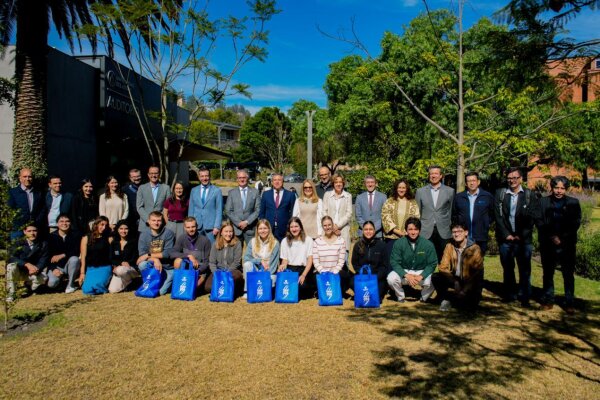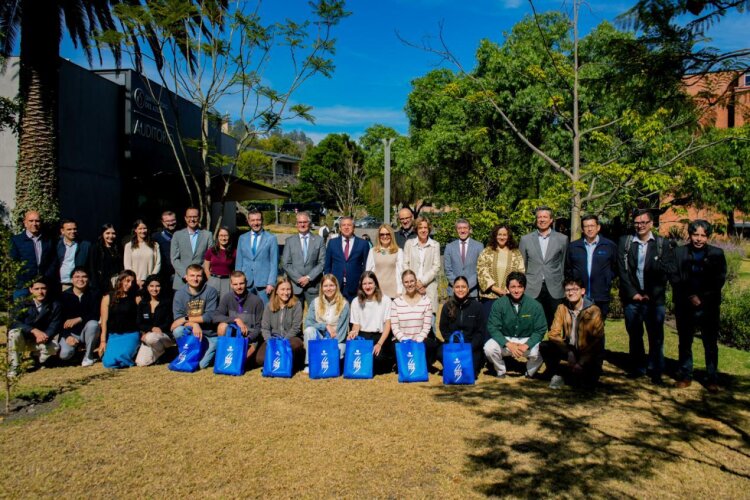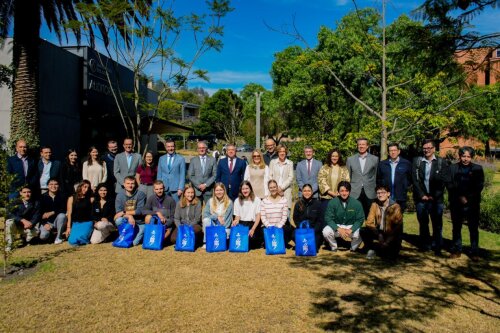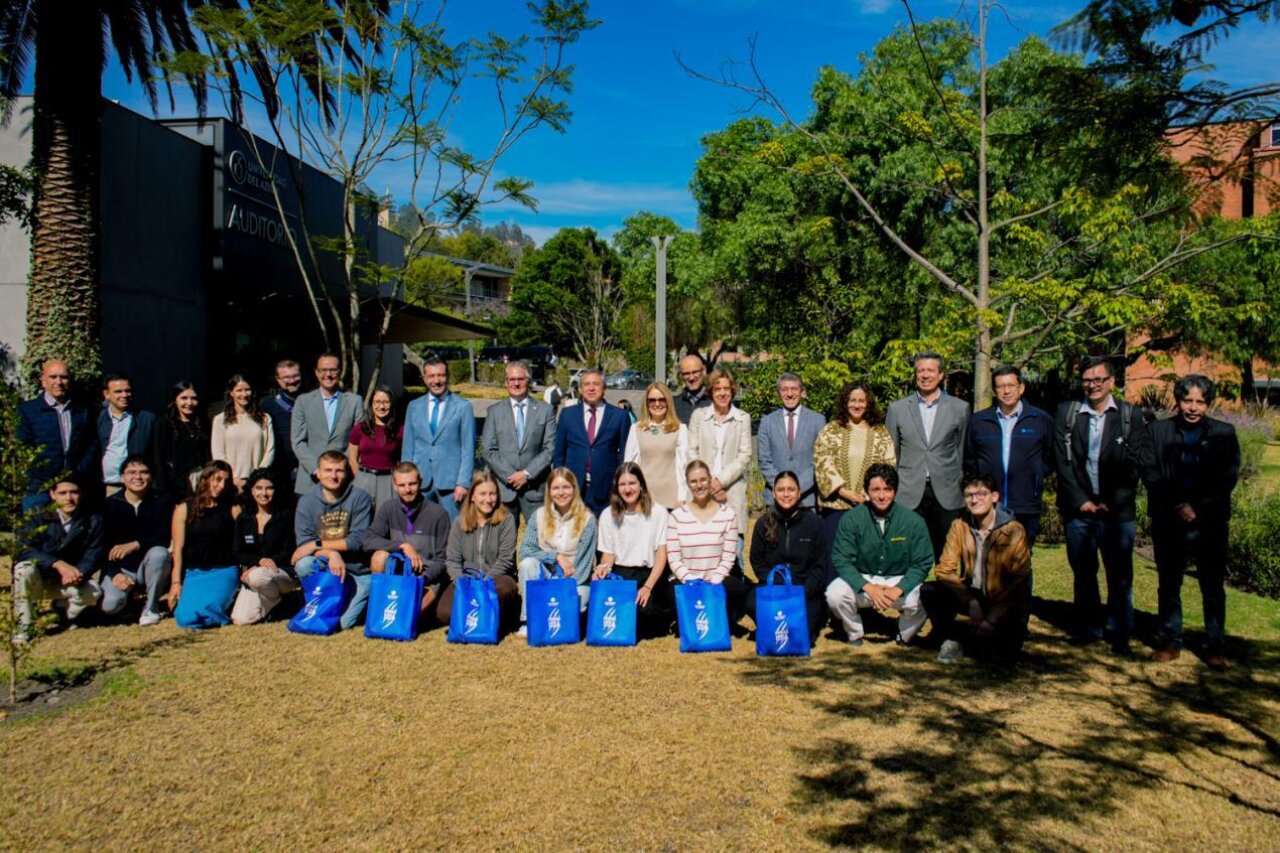
The first EarthWISE Summer School took place in Cuenca, Ecuador, from September 21 to 25, 2026. EarthWISE stands for “Widening Interdisciplinary Science & Education on the Earth System”; it is based in the Urban Remote Sensing Research Group at RUB and is funded by the VolkswagenStiftung through the accompanying project of Dr. Valerie Graw’s junior professorship. The goal of the Summer School is to enable students to engage in intercultural and interdisciplinary exchange and to collaboratively address questions related to the Earth system.
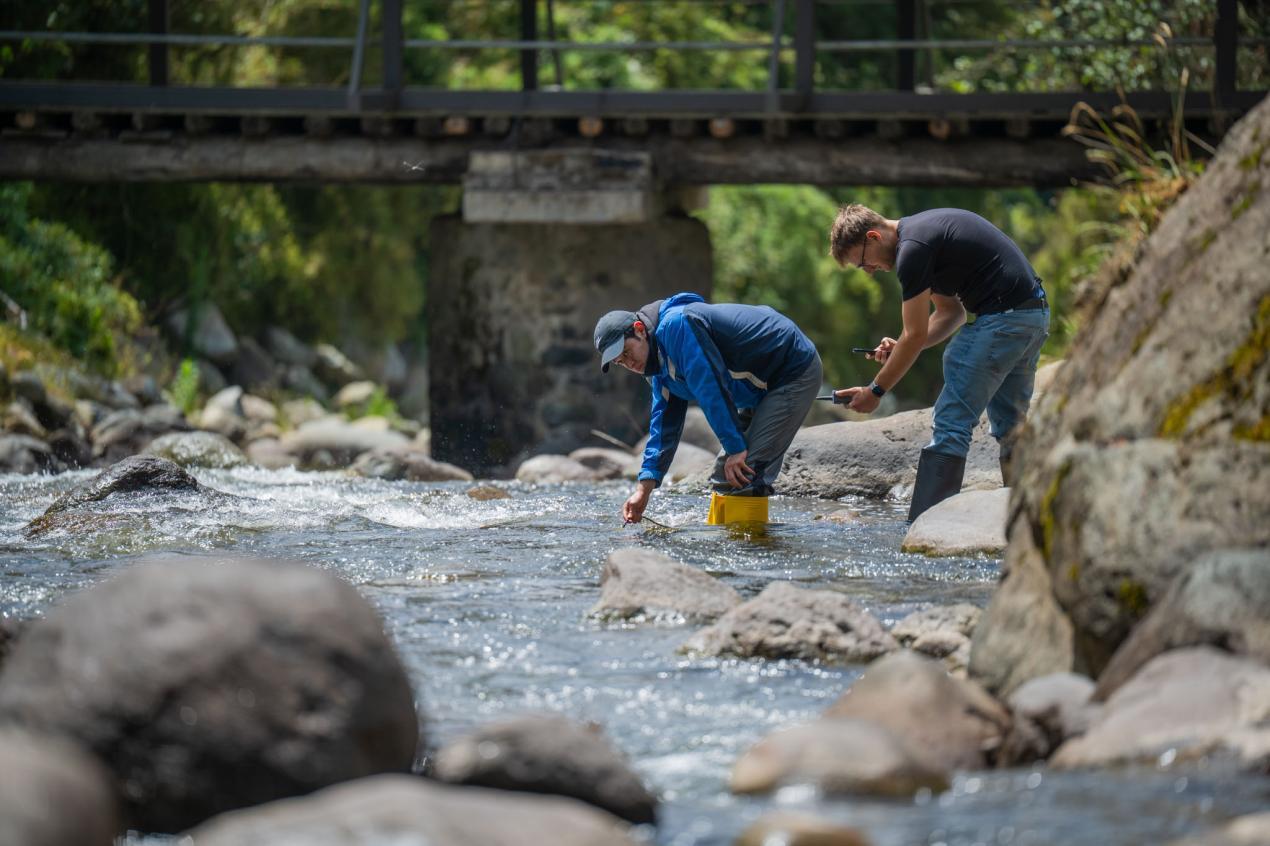
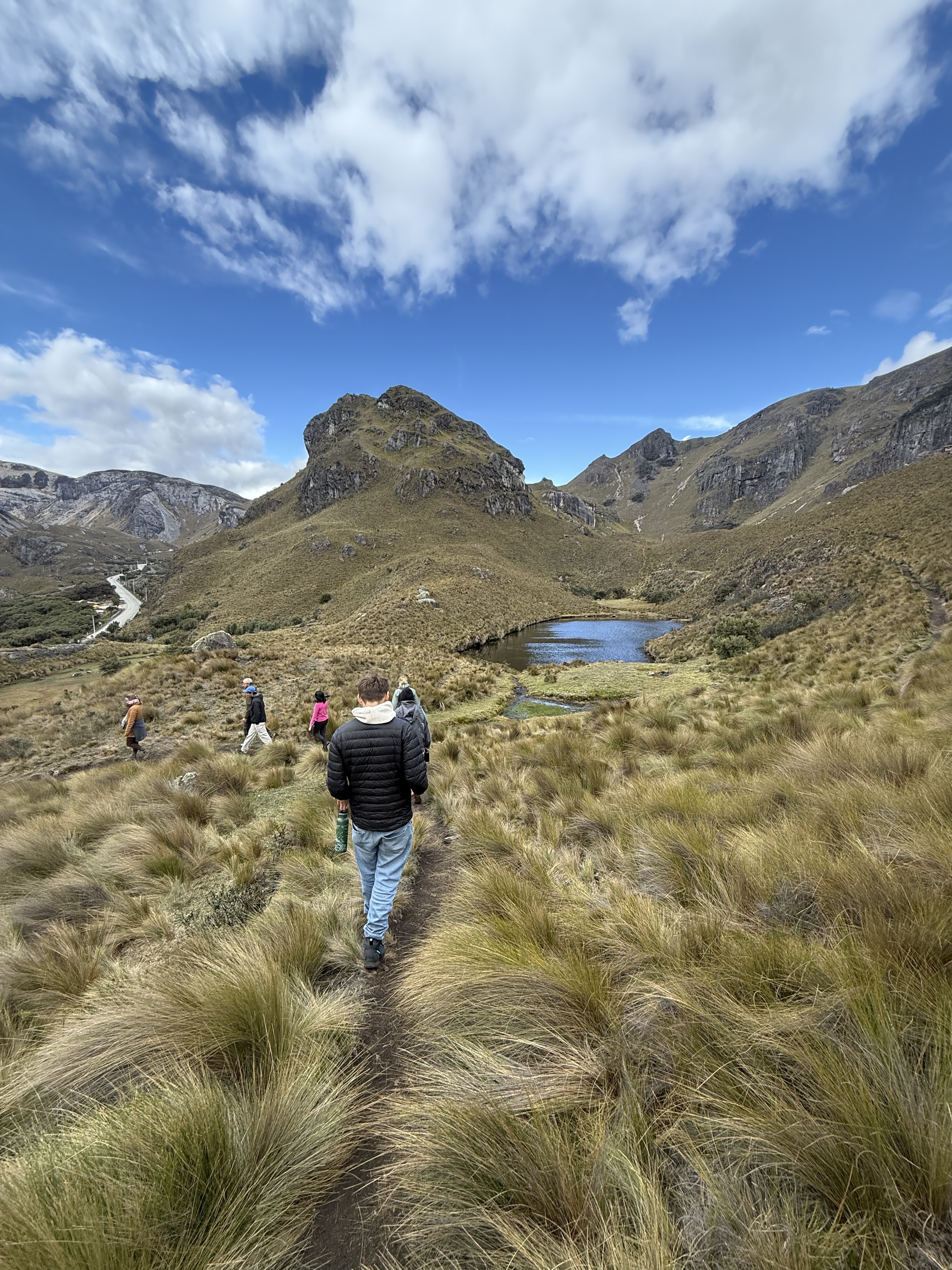
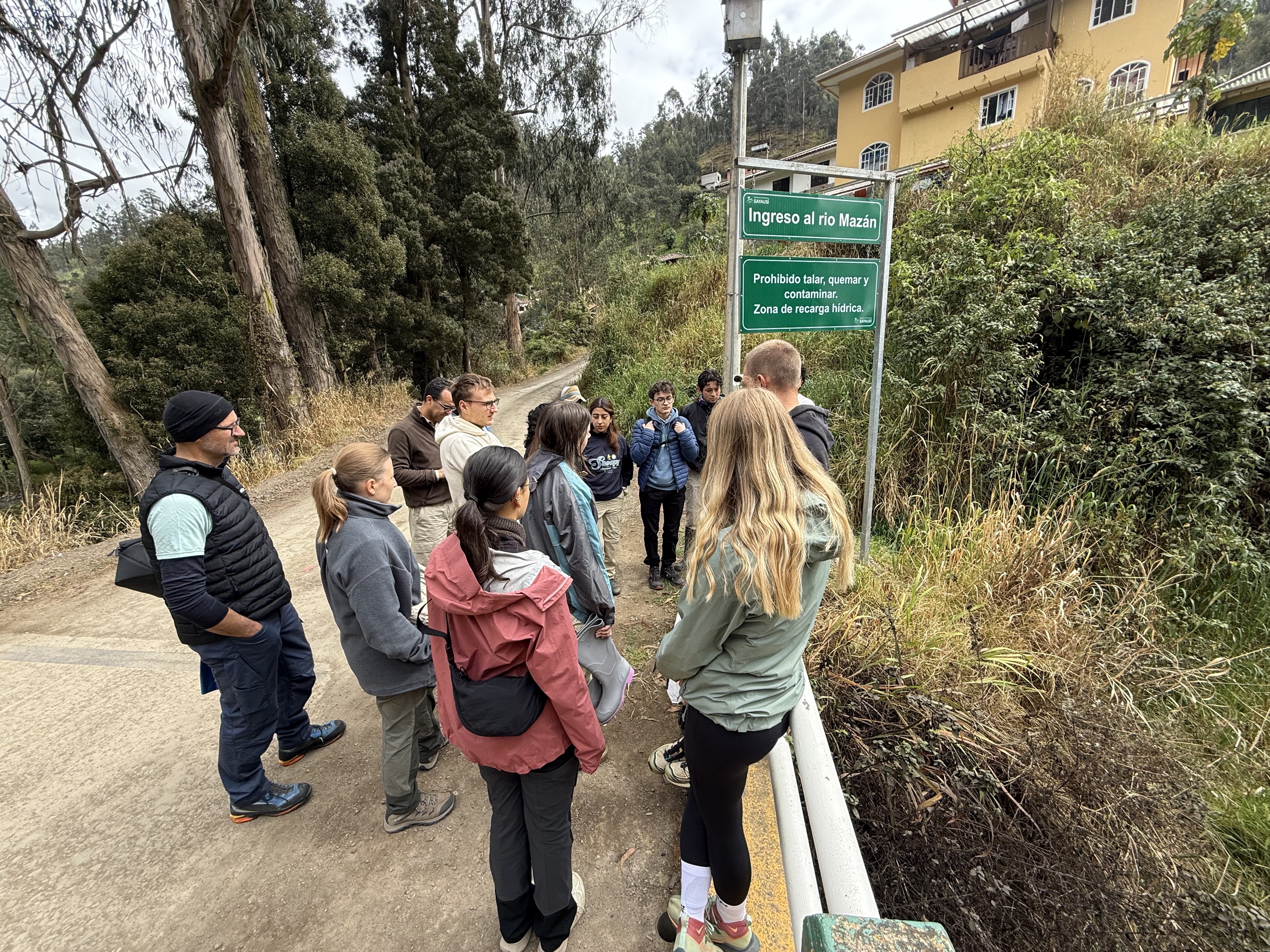
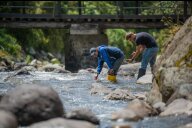
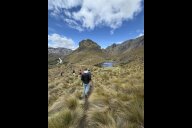
The first Summer School focused on the hydrosphere of the southern Ecuadorian Andes. Six students from RUB worked together with six students from the Universidad del Azuay (UDA) on various topics related to water as a resource. Among other things, they examined the region’s water supply as well as the impacts of tourism and mining activities on the hydrosphere. The group was accompanied by Inga Lammers, a doctoral candidate in the Urban Remote Sensing research group, who is herself conducting research in the region as part of her dissertation. After three days of theoretical foundations and insights into the hydrosphere and the unique conditions of the southern Ecuadorian Andes, the group headed to El Cajas National Park on Thursday. The high-altitude páramo found there plays a central role in Cuenca’s water supply. The expansive páramo landscape acts like a natural sponge: it absorbs, stores, and filters water, and then releases it to the surrounding river systems over time. About 60% of Cuenca’s drinking water comes from this area. At the same time, this sensitive ecosystem is under increasing pressure. Climate change and various human-induced factors affect water availability and the páramo’s function as a water reservoir and filter. To investigate these relationships in a practical setting, water samples were collected and flow velocities were measured at three different locations along a watercourse flowing from Cajas toward Cuenca during the field trip. The measurements began at a tributary heavily affected by human activity and continued to a monitoring site in the immediate vicinity of the national park. While the collected water samples were subsequently taken to the lab for further analysis, there was still time to explore the national park’s unique páramo landscape. The summer school concluded with the start of collaborative work on the research questions developed during the week. German-Ecuadorian teams are now working on smaller projects, which will be presented publicy later this year.
Special thanks go to our Ecuadorian partners, who enriched the summer school with engaging content and organized the various on-site activities. Special thanks also go to Jun.-Prof. Dr. Valerie Graw and Dr. Jose Jara-Alvear (UDA), who launched EarthWISE and thereby laid the foundation for this intercultural and interdisciplinary exchange. EarthWISE has only just begun with this first Summer School: The collaboration will continue at RUB in the summer semester of 2027. At that time, six students from the Universidad del Azuay will be visiting Bochum to continue their joint work on the Earth system.

Copyright © Geographical Institute 2026
Last update: Okt 05, 2026