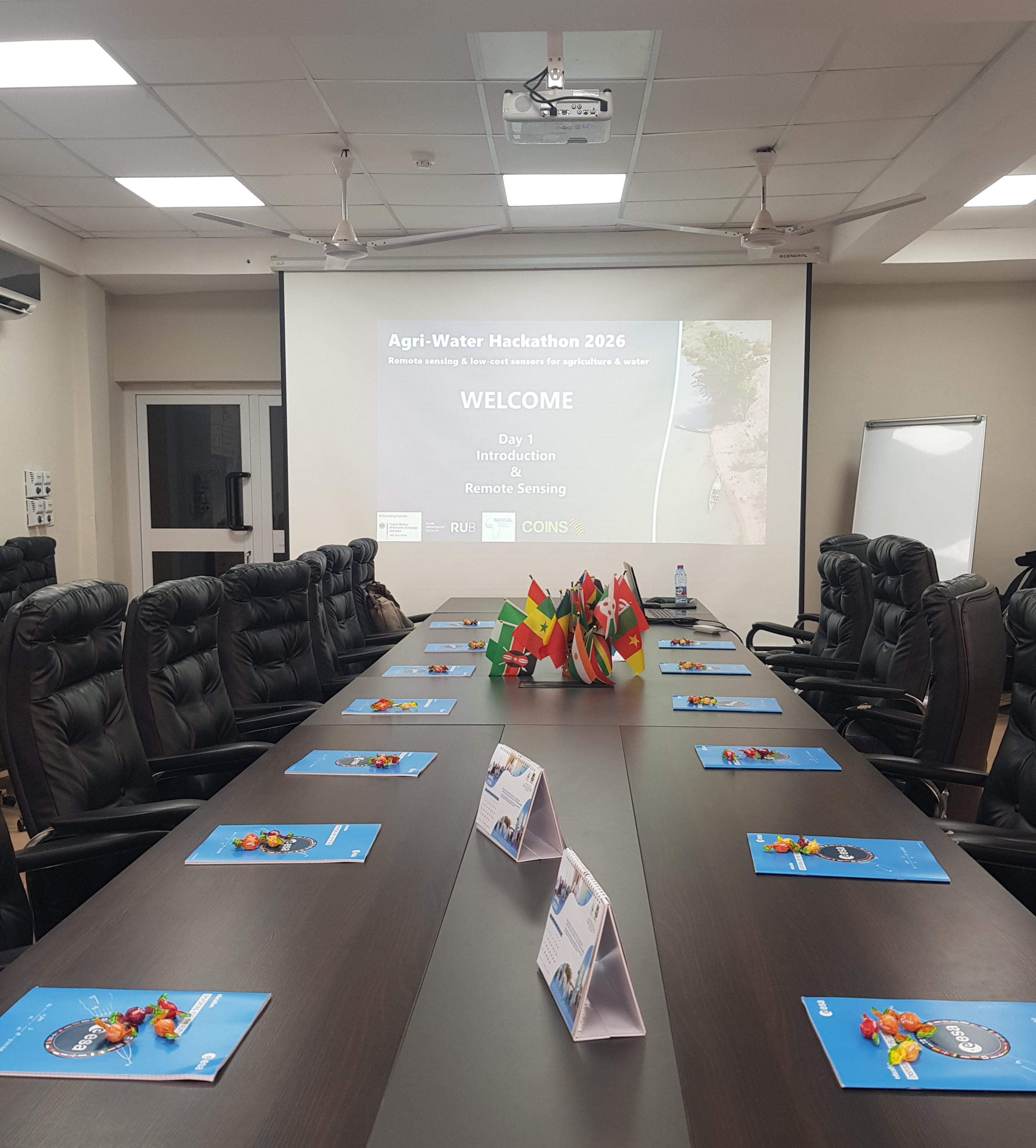
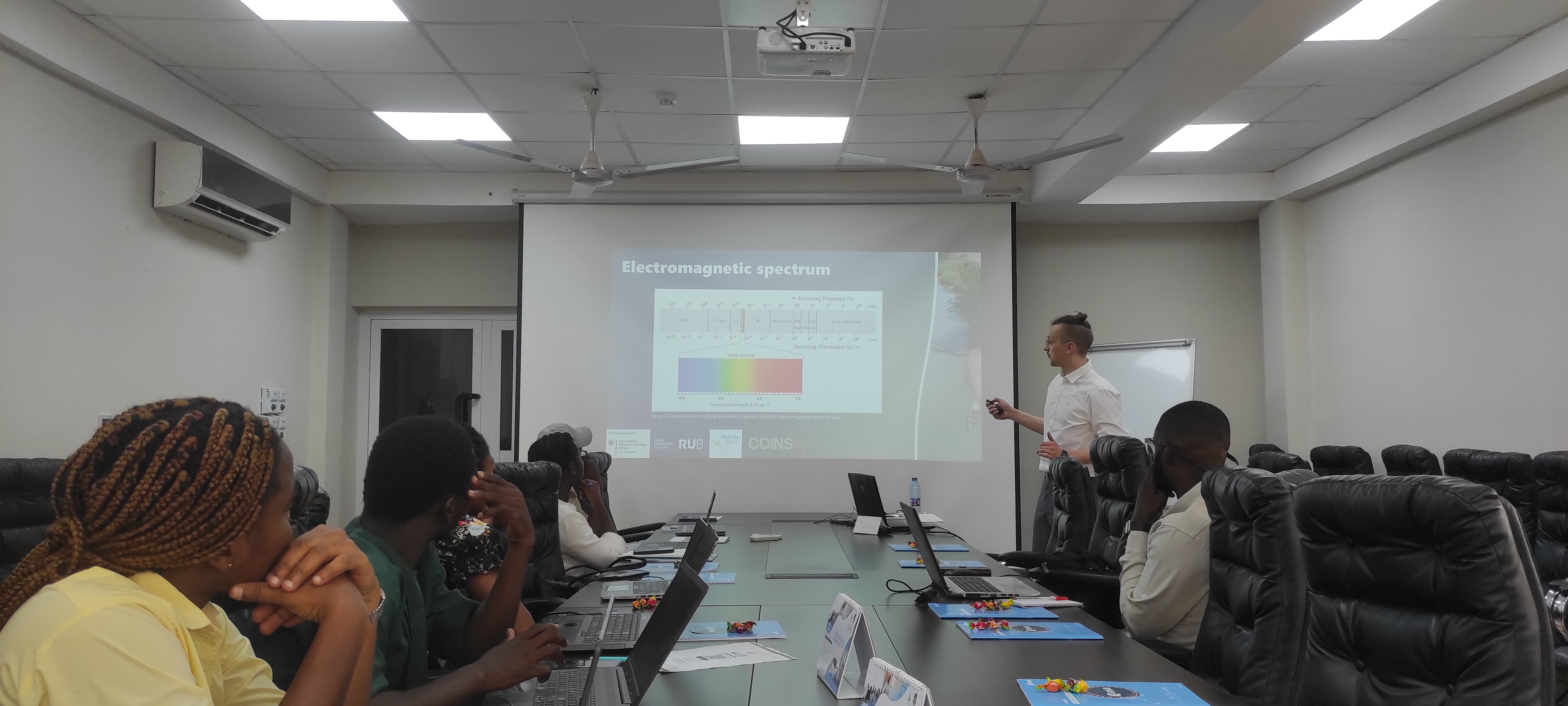
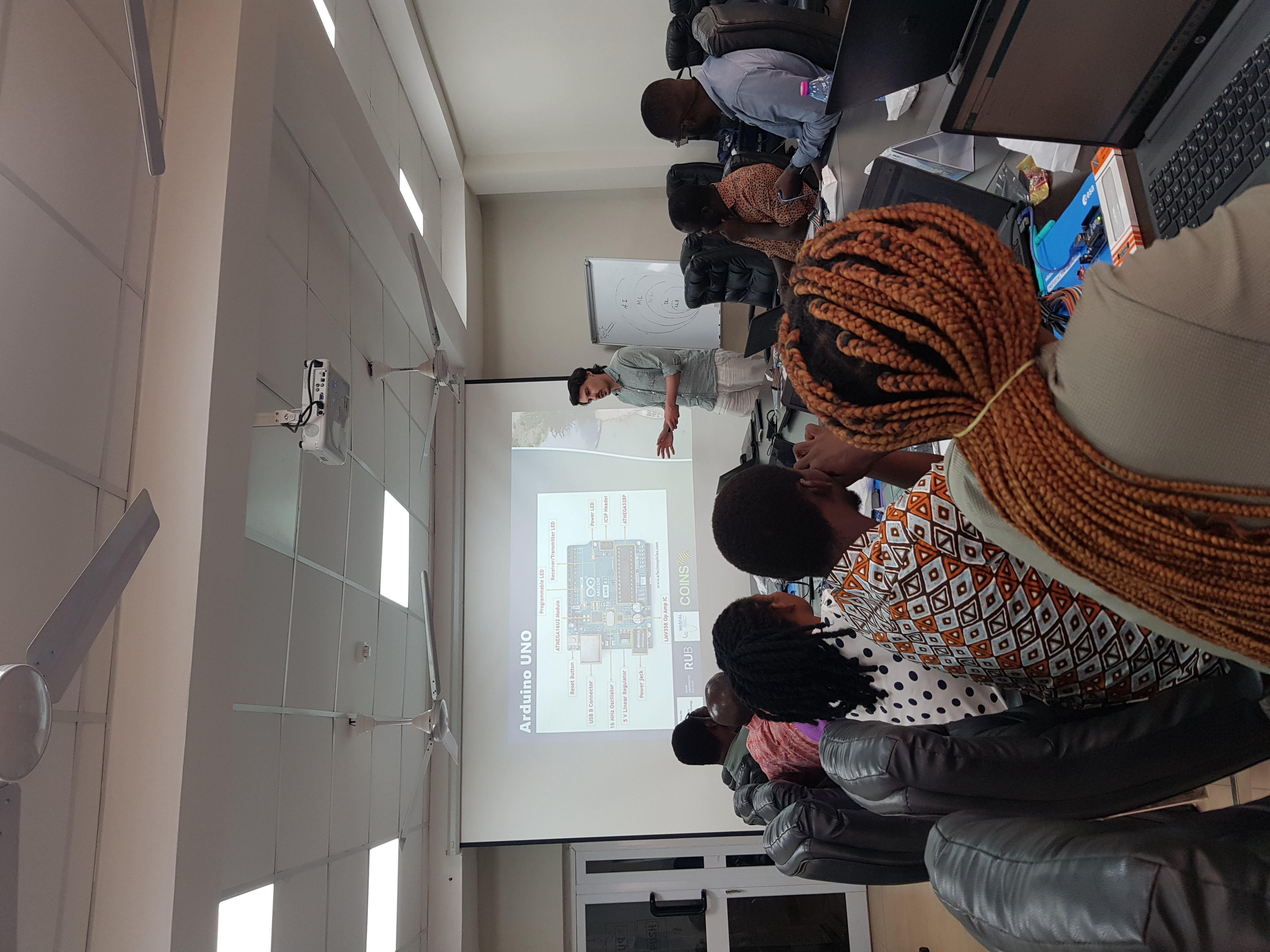
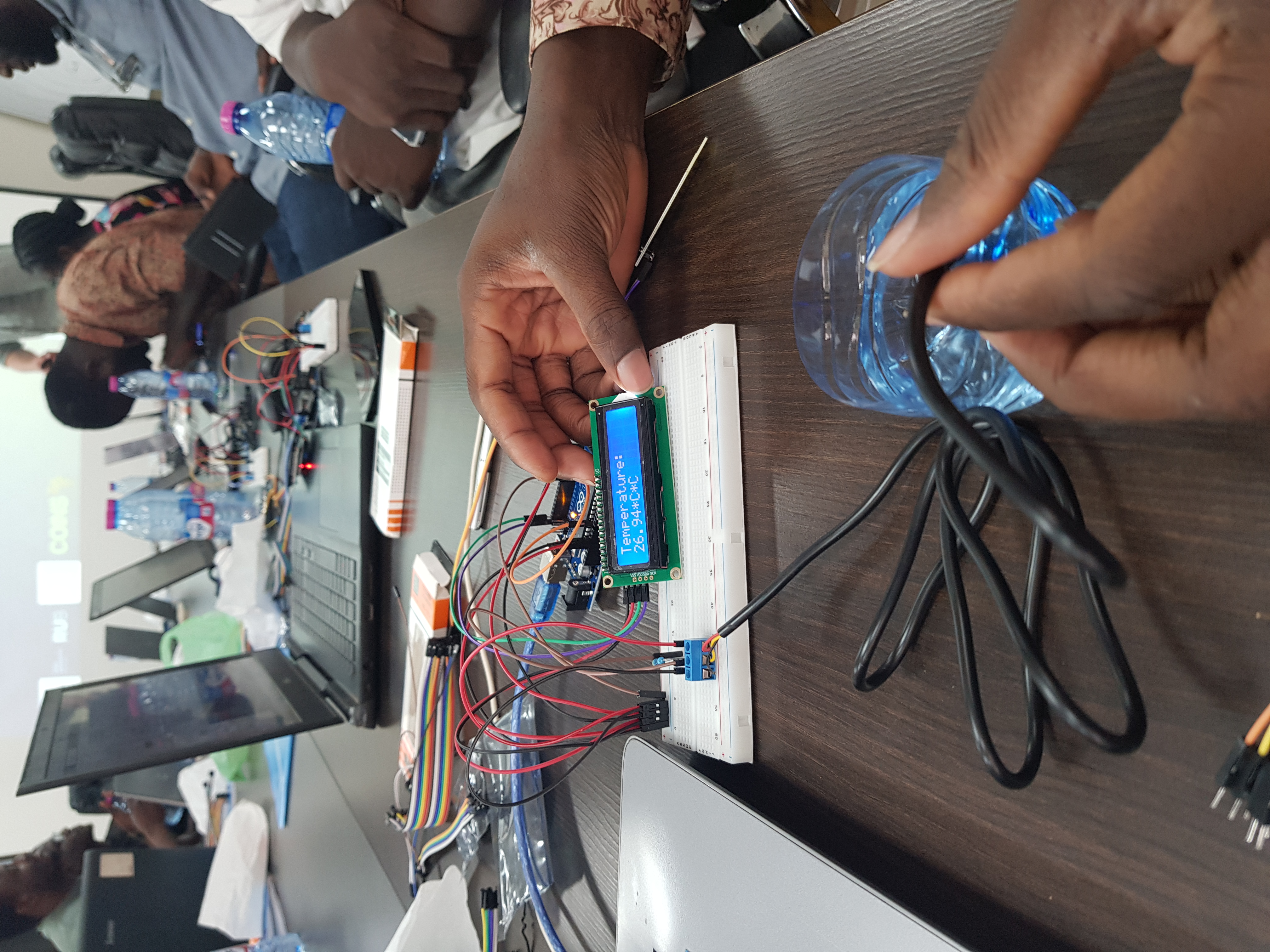
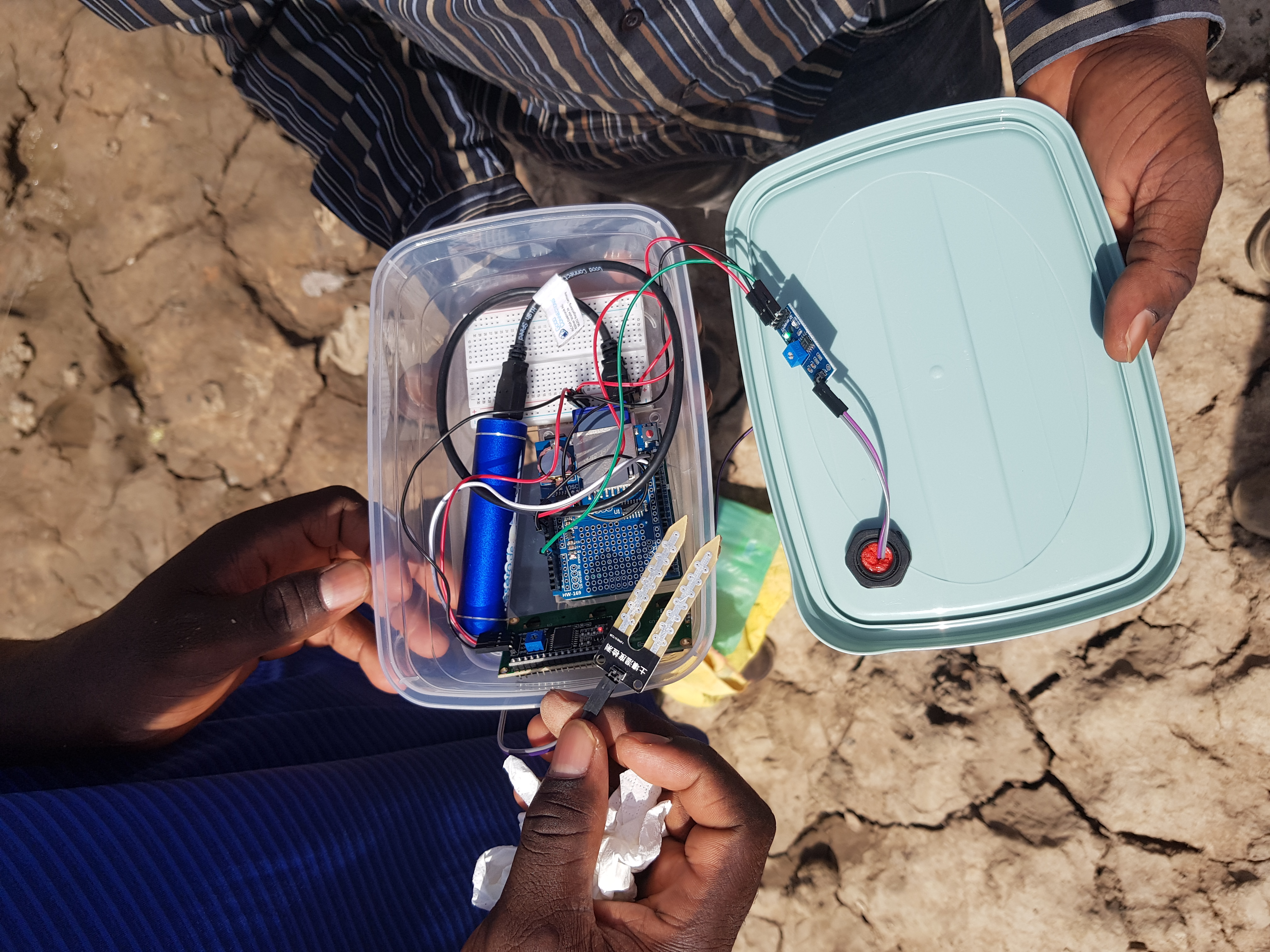
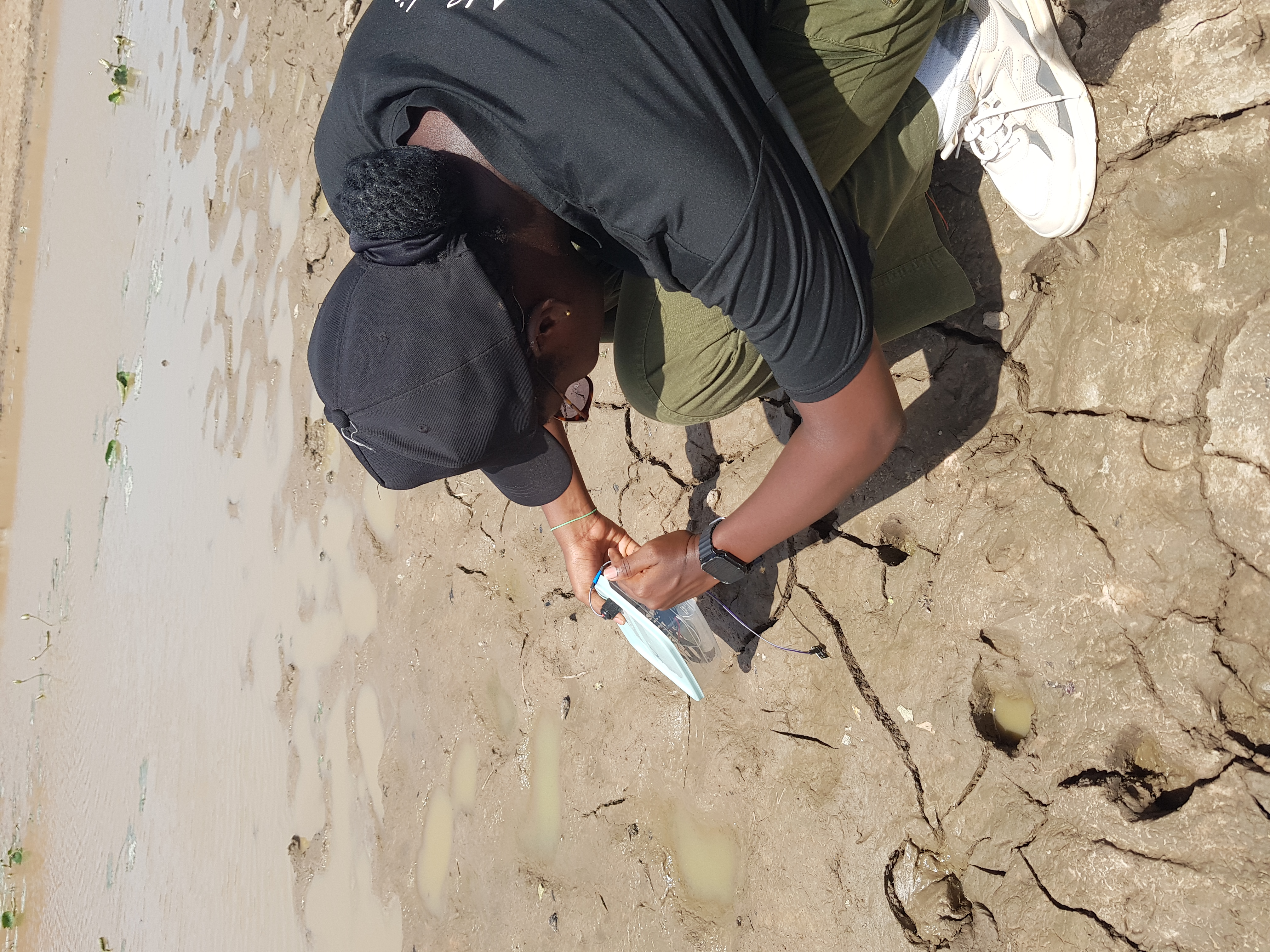
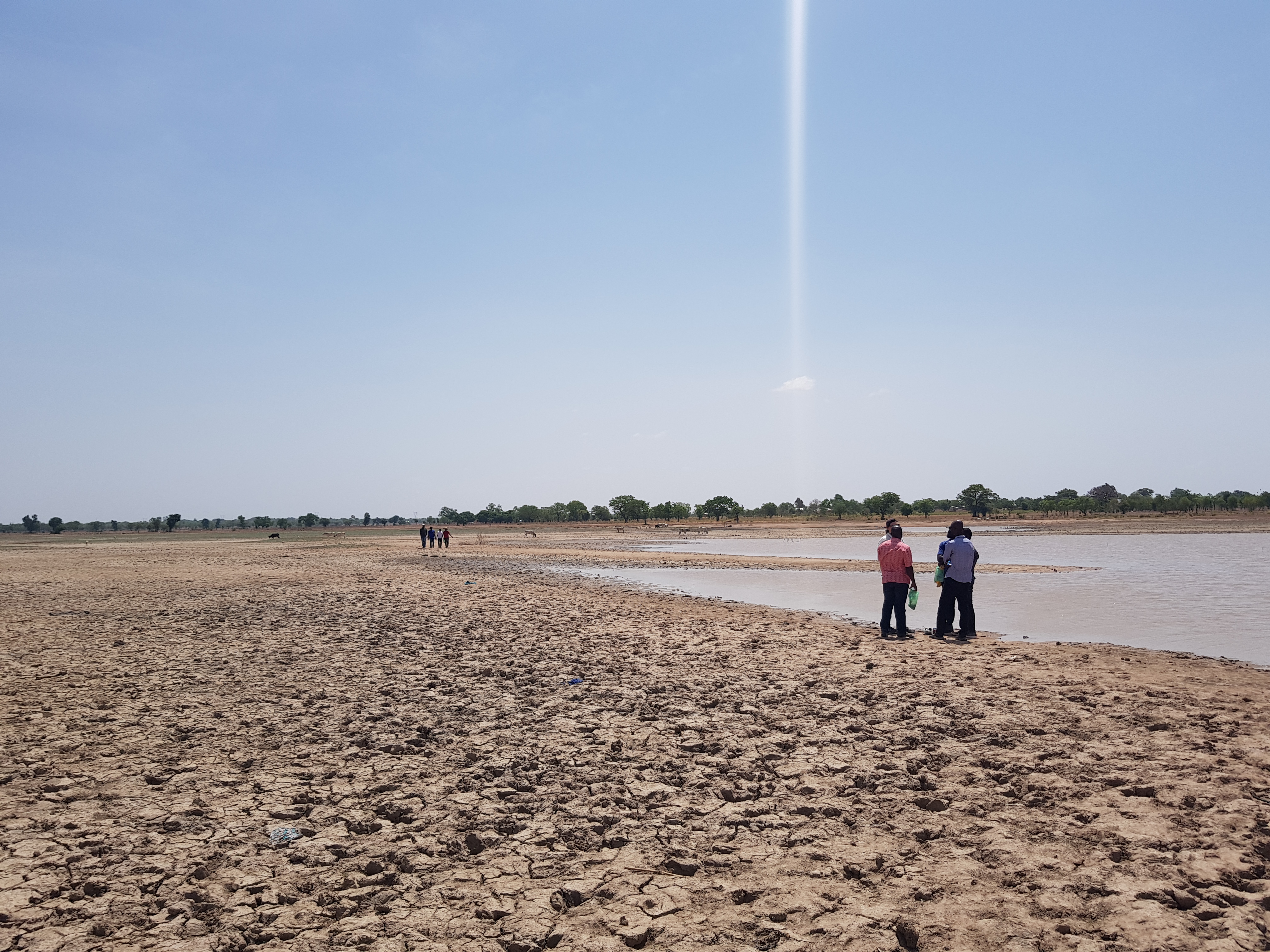
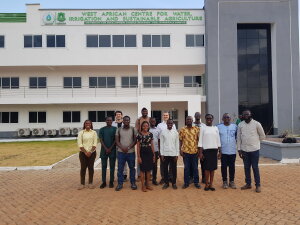
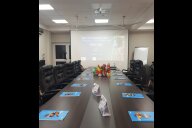
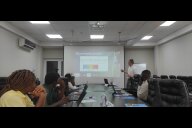
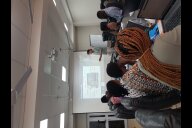
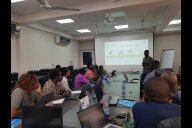
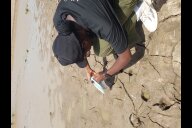
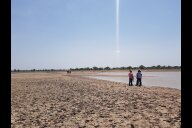
The Agri-Water Hackathon 2026 took place from April 14 to 16 2026 on the campus of the University for Development Studies (UDS) in Nyankpala (Ghana). During the hackathon, participants learned about remote sensing and low-cost sensor methods and how these can be applied to real-world challenges in local agriculture and water management.
The hackathon is part of the project COINS. It was organized and carried out by Niels Dedring, Jonas Siethoff, and Dr. Stefanie Steinbach from the Working Group Urban Remote Sensing (Jun.-Prof. Valerie Graw) in cooperation with the West African Science Service Centre on Climate Change and Adapted Land Use (WASCAL) and with funding from the Federal Ministry of Research, Technology, and Space (BMFTR).
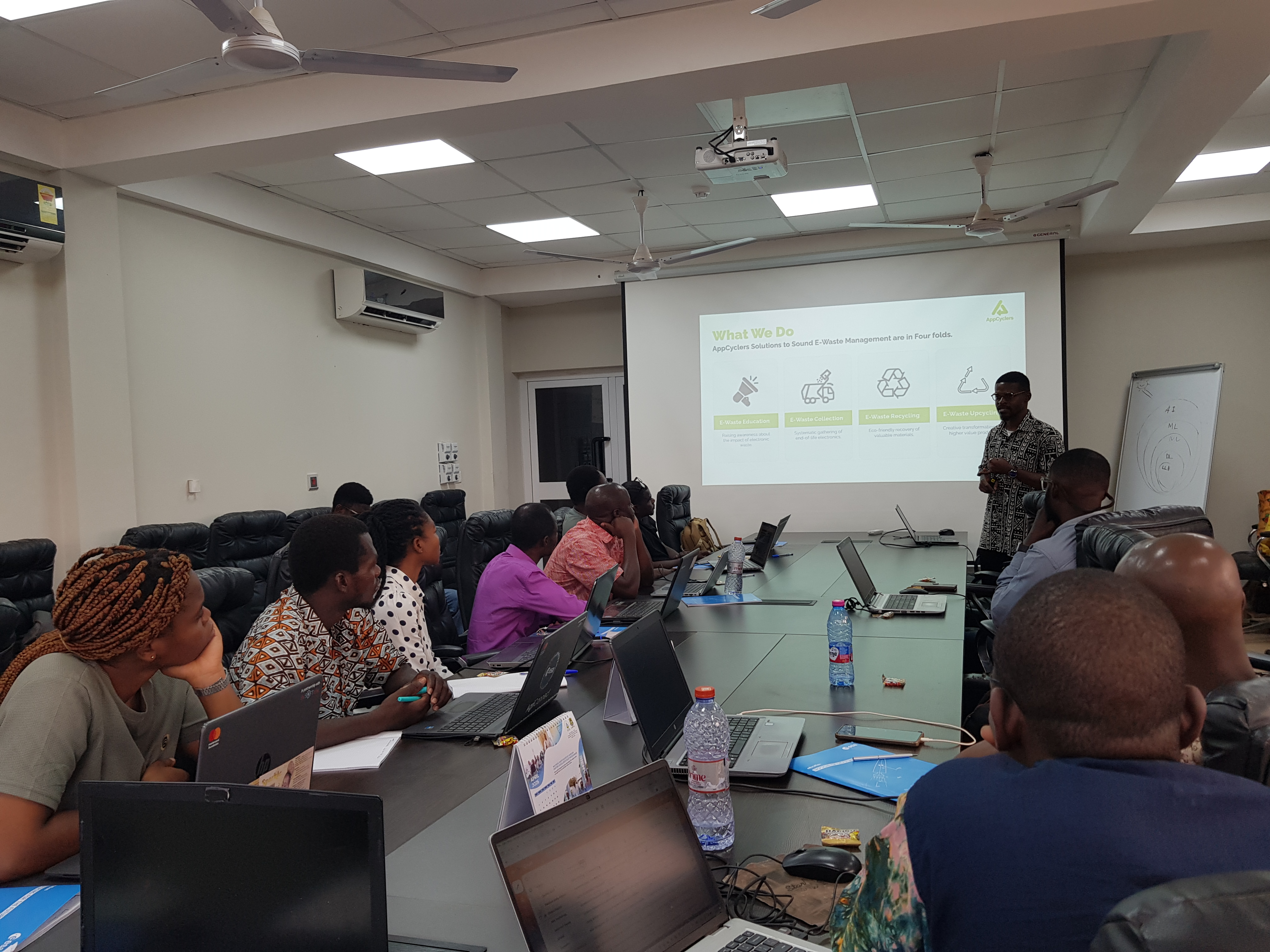
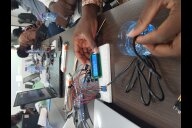
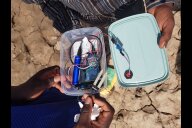
In a short period of time, the UDS students acquired knowledge of various remote sensing methods. This included working with Sentinel-2 satellite imagery in QGIS and Google Earth Engine, as well as first steps in machine learning. Further, the students learned about the use of low-cost sensor setups. These included soil moisture, water temperature, and turbidity sensors, which the students applied in practice during a field trip. The methods learned were continuously linked to real-world problems from the students’ respective fields of study to develop concepts for addressing challenges in agriculture and water management. Not only were technical skills learned, but critical thinking regarding the advantages and limitations of methods, spatial and temporal scales, costs, and feasibility was encouraged. Additionally, Agudor K. Agabas, Founder & CEO of AppCyclers, a startup specializing in innovative management and recycling of electronic waste, delivered a keynote speech. Agudor K. Agabas is from the region himself, and the idea for his startup originated during a hackathon.
In addition to the three intensive on-site days in Nyankpala, the Agri-Water Hackathon 2026 also included an online kick-off meeting one week before the hackathon began, an independent online learning phase, and a final online closure round on April 23, 2026, in which the project teams competed against one another. During the closure round, the interdisciplinary teams presented the concepts they had developed over the previous days in a pitch to an expert audience. The winning team will be invited to participate in the COINS Dissemination Workshop from July 7–9, 2026, in Tamale, Ghana, to present their concept once again and engage in discussion with experts. We would like to once again congratulate the winning team of the hackathon, consisting of Lovette Raphael, Narcisse Yehouenou, and Iddrisu Hamza Bawa, for their concept “Every Drop Counts: Smart Irrigation for Resilient Farming”.
The organizing team would like to thank everyone involved for their dedication and the participants for their high level of motivation, which made this hackathon a complete success.

Copyright © Geographical Institute 2026
Last update: Mai 13, 2026