
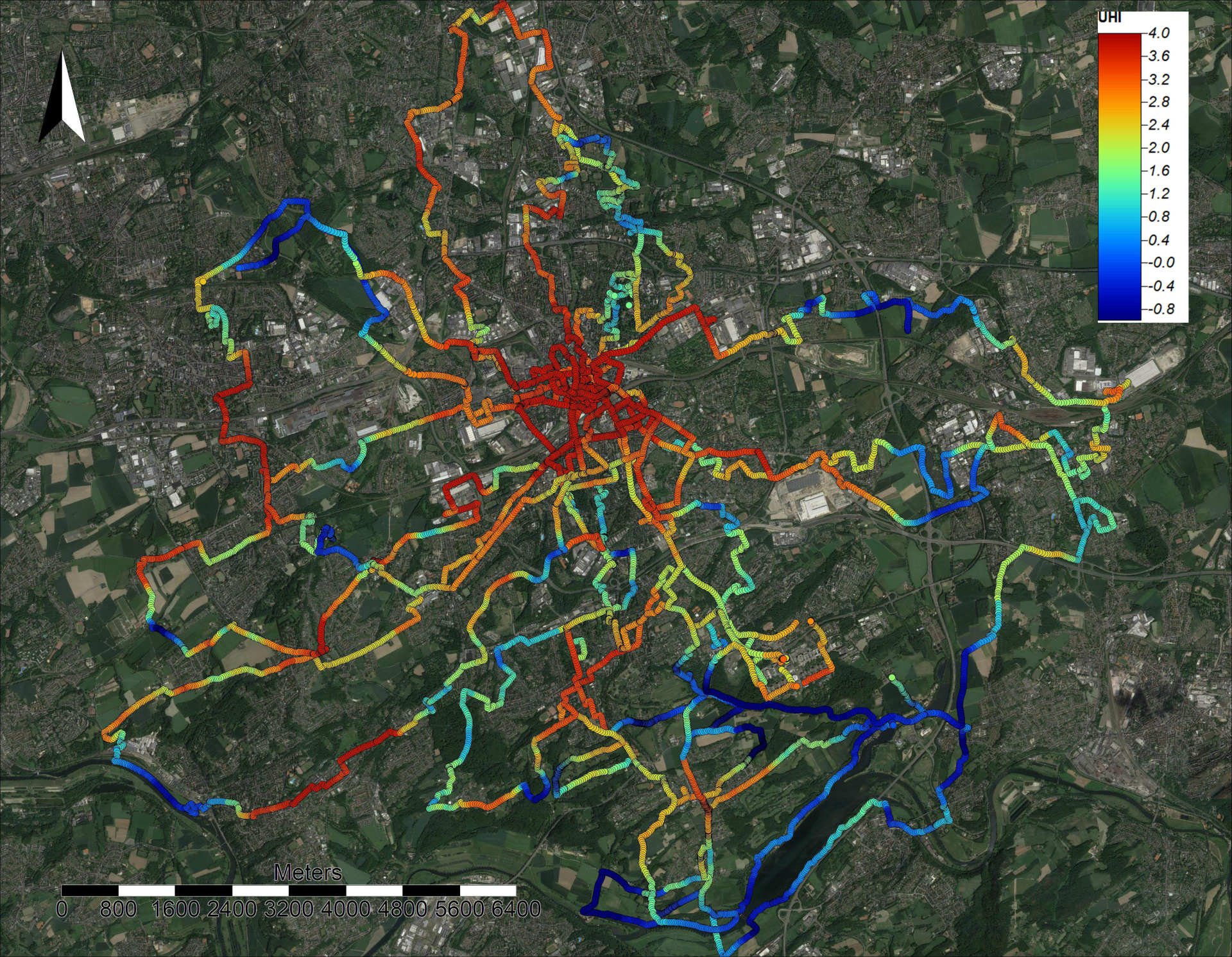
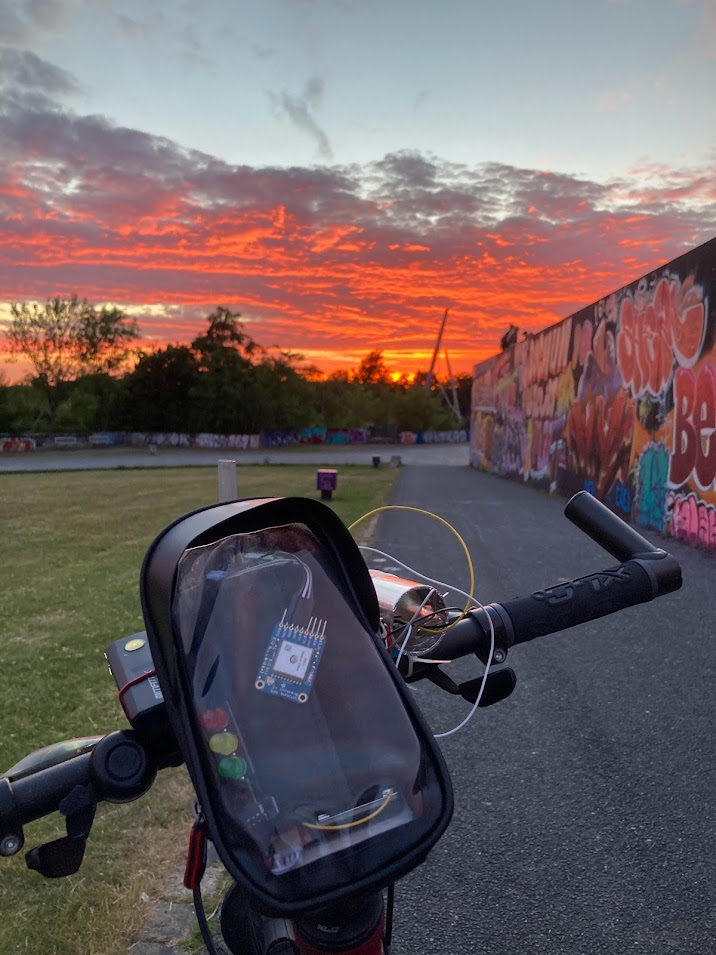
In the seminar “Crowdbiking Air Temperatures with Bicycles”, master’s students spent an entire semester investigating the mobile measurement of the urban climate. The aim was to gain a better understanding of urban heat islands and local climate processes through self-collected data. To achieve this, the students independently assembled measuring instruments consisting of a Raspberry Pi Zero, a temperature and humidity sensor (SHT-85), particulate matter sensors (PM10 and PM2.5), GPS, and a power bank for energy supply. After calibrating the sensors at the Rudolph Geiger Station near Ruhr University Bochum, they set up the systems at home and planned measurement routes within the city of Bochum.
Three measurement campaigns were conducted in Bochum:
The use of bicycles and the crowdsourcing approach offers several advantages, such as the ability to cover flexible and longer routes without generating emissions that could distort the measurement results. In addition, a higher spatial resolution could be achieved compared to stationary measurements. The collected data were independently analyzed and interpreted by the students.

Copyright © Geographical Institute 2026
Last update: Jun 08, 2026